


Trisha Krishnan: South Indian Cinema’s Reigning Queen
Trisha Krishnan stands as one of India’s highest-paid actresses and a true powerhouse in South Indian cinema. This comprehensive guide is for fans, movie enthusiasts, and anyone curious about the journey of this acclaimed performer who has dominated Tamil and Telugu films for over two decades.
We’ll explore her humble beginnings from beauty pageants to stardom, trace her remarkable rise through blockbuster hits like Ghilli and Varsham, and examine her career expansion into Hindi, Kannada, and Malayalam cinema. You’ll also discover her most celebrated performances in films like ’96 and Ponniyin Selvan, plus the impressive collection of awards that have cemented her status as the “Queen of South India.”
Early Life and Educational Background
Family Heritage and Birth Details
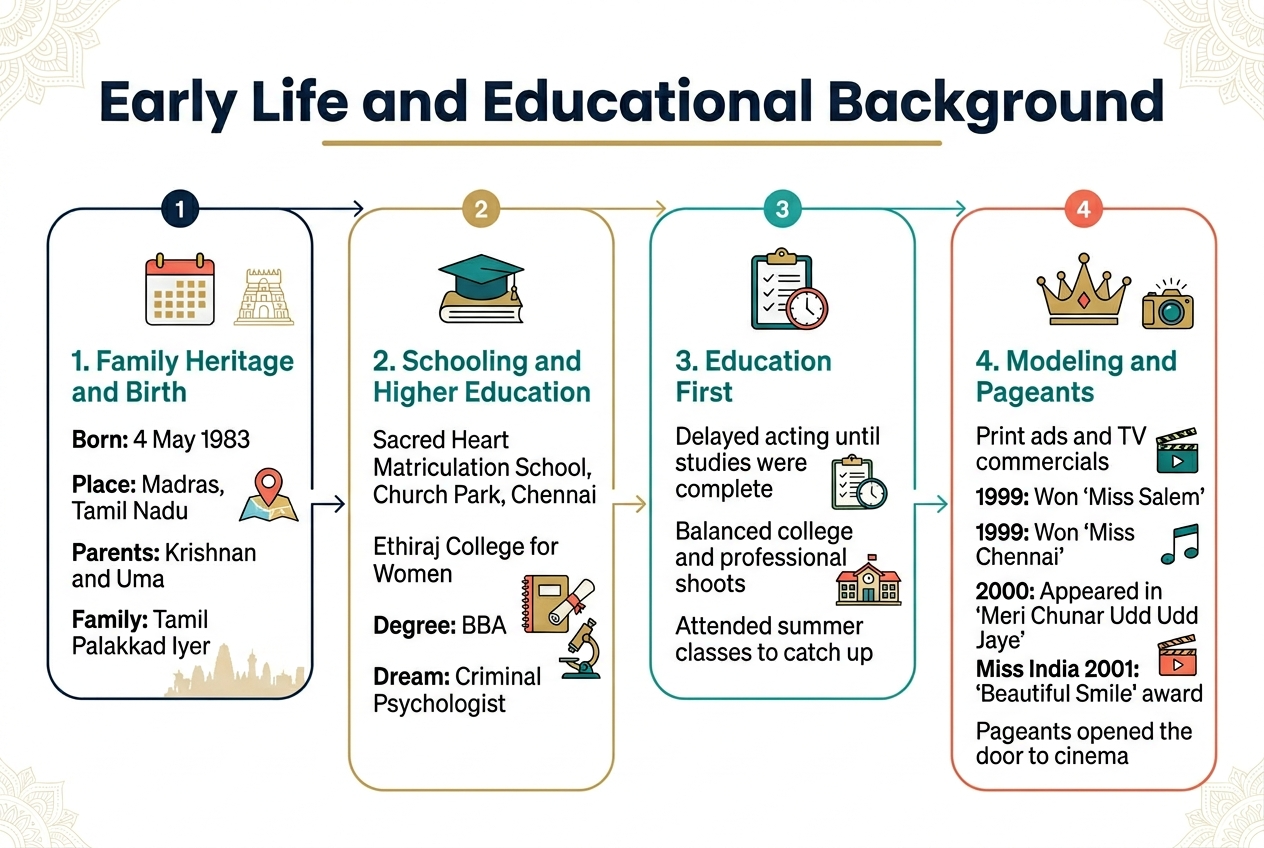
Trisha Krishnan was born on 4 May 1983 in Madras, Tamil Nadu, to parents Krishnan and Uma. Her family background reflects the rich cultural heritage of South India, as she belongs to a Tamil Palakkad Iyer family. This heritage would later influence her career trajectory and cultural understanding, providing her with a deep connection to Tamil traditions and values that would resonate throughout her acting career.
Her birth in Madras, now known as Chennai, positioned her at the heart of the South Indian film industry from the very beginning. The city’s significance as a cultural and cinematic hub would prove instrumental in shaping her future opportunities and connections within the entertainment industry.
Academic Pursuits and Career Aspirations
Trisha’s educational journey began at Sacred Heart Matriculation School in Church Park, Chennai, where she completed her schooling. Her academic excellence and dedication were evident from an early age, as she consistently pursued higher education despite the demanding nature of her emerging career in entertainment.
She went on to pursue a Bachelor of Business Administration (BBA) at Ethiraj College for Women in Chennai, demonstrating her commitment to academic achievement. What makes her educational journey particularly noteworthy is her initial career aspiration to become a criminal psychologist. This ambitious goal reflected her intellectual curiosity and desire to make a meaningful impact in a completely different field from entertainment.
Her dedication to education was so strong that she initially resisted entering the acting industry until she could complete her studies. This decision showcased her mature approach to career planning and her understanding of the importance of education as a foundation for any future endeavors. Even when opportunities in modeling and cinema began to emerge, Trisha maintained her academic commitments by balancing college responsibilities with professional shoots, attending summer classes to compensate for any missed educational content.
Entry into Modeling and Beauty Pageants
Trisha’s transition from academics to the entertainment industry began through modeling, where she appeared in various print advertisements and television commercials. This initial exposure to the camera and professional photography helped her develop the confidence and skills that would later prove invaluable in her acting career.
Her breakthrough moment came in 1999 when she won the prestigious “Miss Salem” beauty pageant. This victory marked the beginning of her recognition in the pageant circuit and opened doors to further opportunities. Building on this success, she continued to participate in beauty contests and subsequently won the Miss Chennai contest, which significantly elevated her profile in the regional entertainment scene.
The pinnacle of her pageant career came at Miss India 2001, where she received the “Beautiful Smile” award. This recognition at a national level brought her widespread attention and established her as a notable personality in the beauty and entertainment industry.
Her participation in the 1999 Miss Chennai pageant proved to be particularly significant, as winning this contest marked her official entry into the cinema industry. The visibility and recognition she gained from this victory caught the attention of filmmakers and industry professionals, setting the stage for her transition from beauty pageants to acting.
In 2000, she appeared in Falguni Pathak’s popular music video “Meri Chunar Udd Udd Jaye,” which further expanded her reach and showcased her screen presence to a broader audience. This appearance served as an important stepping stone, bridging her pageant success with her eventual entry into mainstream cinema.
Rise to Stardom in South Indian Cinema
Breakthrough Performances in Tamil Cinema
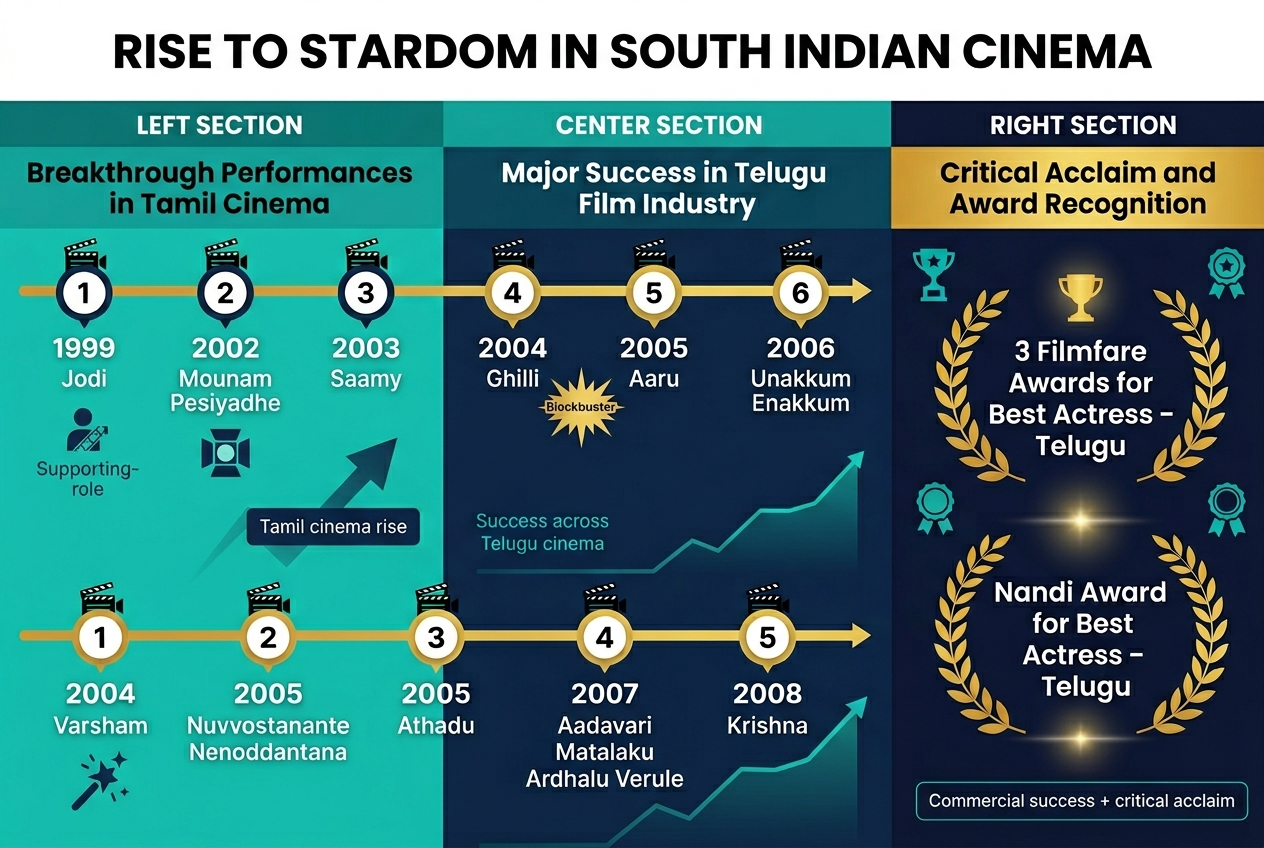
Trisha Krishnan’s entry into the Tamil film industry began modestly with a minor supporting role in the romantic drama Jodi in 1999. This initial appearance provided her with valuable exposure to the industry, though it would take a few more years before she would secure her first lead role. The turning point came in 2002 with Mounam Pesiyadhe, where she finally stepped into the spotlight as the female protagonist, marking the beginning of her journey toward stardom.
Following this breakthrough, Trisha’s career trajectory accelerated rapidly through a series of commercially successful films that established her as one of Tamil cinema’s most sought-after actresses. Her starring role in Saamy (2003) demonstrated her ability to hold her own alongside established male leads, while Ghilli (2004) became a massive blockbuster that significantly elevated her profile within the industry. The momentum continued with notable performances in Aaru (2005) and Unakkum Enakkum (2006), each contributing to her growing reputation as a versatile and bankable actress.
Major Success in Telugu Film Industry
Now that we have covered her Tamil cinema achievements, Trisha’s expansion into the Telugu film industry proved equally impressive and marked a significant milestone in her career. Her Telugu debut with Varsham (2004) was met with tremendous success, establishing her as a prominent figure in Tollywood cinema. This initial success opened doors to a series of high-profile projects that would cement her position across multiple South Indian film industries.
The actress continued to build on this foundation with a string of successful Telugu films, including Nuvvostanante Nenoddantana (2005) and Athadu (2005), both of which showcased her range and appeal to Telugu audiences. Her career in this industry reached new heights with Aadavari Matalaku Ardhalu Verule (2007) and Krishna (2008), films that not only performed well commercially but also demonstrated her ability to adapt to different regional cinema styles and storytelling approaches.
Critical Acclaim and Award Recognition
With this impressive body of work across both Tamil and Telugu cinema, Trisha’s exceptional performances garnered significant recognition from industry peers and critics alike. Her dedication to her craft and consistent delivery of memorable performances earned her three Filmfare Awards for Best Actress – Telugu, a testament to her impact on the Telugu film industry and her ability to connect with audiences through compelling portrayals.
The recognition extended beyond commercial success when she received the prestigious Nandi Award for Best Actress – Telugu, further validating her talent and contribution to regional cinema. These accolades not only acknowledged her individual performances but also established her as a serious actress capable of balancing commercial appeal with critical appreciation, setting the stage for her continued success across multiple film industries.
Career Expansion Across Multiple Film Industries
Bollywood Debut and Hindi Cinema Ventures
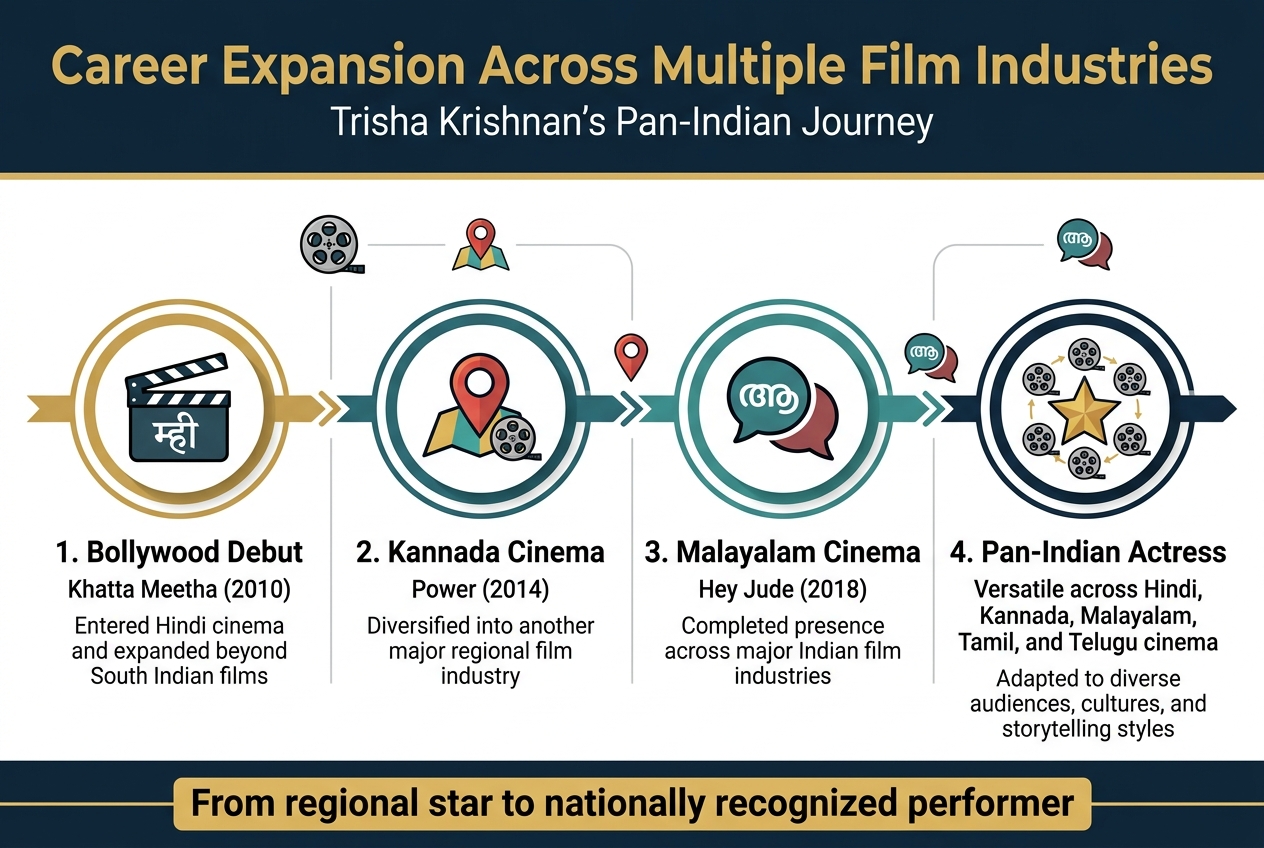
Trisha Krishnan’s foray into Hindi cinema marked a significant milestone in her acting journey when she made her Bollywood debut with Khatta Meetha in 2010. This venture into the Hindi film industry represented a strategic expansion of her career beyond her established presence in South Indian cinema. The transition to Bollywood demonstrated her ambition to reach wider audiences across different linguistic markets in India.
Her entry into Hindi cinema showcased her ability to adapt to different filmmaking styles and cultural contexts while maintaining her signature screen presence. The move to Bollywood was particularly significant as it opened new avenues for her career trajectory and established her as an actress capable of transcending regional boundaries. This debut laid the foundation for her evolution from a primarily South Indian actress to a more nationally recognized performer.
Exploration of Kannada and Malayalam Cinema
Building upon her Hindi cinema experience, Trisha continued her pan-Indian expansion by venturing into Kannada cinema with Power in 2014. This debut in the Kannada film industry further diversified her portfolio and demonstrated her commitment to exploring different regional film markets across India.
Her Malayalam cinema debut came later with Hey Jude in 2018, completing her presence across multiple major Indian film industries. This systematic exploration of different regional cinemas reflected her strategic approach to career development and her desire to connect with diverse audience bases across the country.
Evolution as a Versatile Pan-Indian Actress
Through her ventures in Hindi, Kannada, and Malayalam films, Trisha successfully evolved from being known primarily for her work in Tamil and Telugu cinema to becoming a truly versatile Pan-Indian actress. This transformation was achieved through her deliberate expansion across multiple film industries, each requiring adaptation to different cultural sensibilities, storytelling approaches, and audience expectations.
Her journey across these diverse film industries established her as one of the few actresses capable of seamlessly transitioning between different regional cinemas while maintaining her appeal and authenticity in each market.
Notable Performances and Career Milestones
Critically Acclaimed Films and Character Portrayals
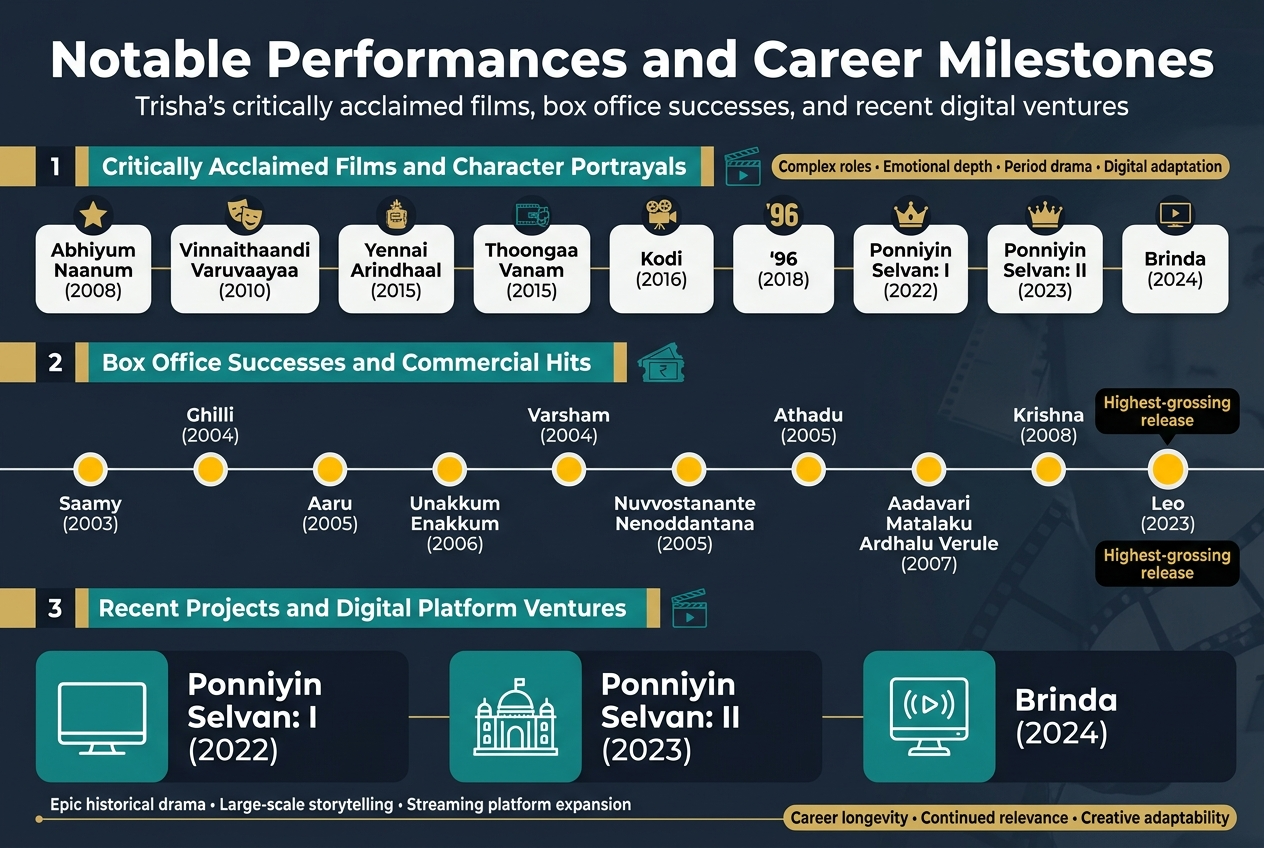
Now that we have covered Trisha’s expansion across multiple film industries, her critically acclaimed performances showcase her exceptional range as an actress. Her portrayal in Abhiyum Naanum (2008) marked a significant turning point in her career, demonstrating her ability to handle complex emotional narratives. This performance was followed by her memorable role in Vinnaithaandi Varuvaayaa (2010), which further solidified her reputation as a versatile performer capable of delivering nuanced characters.
Her critically acclaimed filmography continued to expand with powerful performances in Yennai Arindhaal (2015) and Thoongaa Vanam (2015), where she proved her mettle alongside established stars. The political drama Kodi (2016) allowed her to explore yet another dimension of her acting prowess, while her performance in ’96 (2018) resonated deeply with audiences and critics alike, earning widespread appreciation for its authenticity and emotional depth.
Most recently, her roles in Mani Ratnam’s epic Ponniyin Selvan: I (2022) and Ponniyin Selvan: II (2023) demonstrated her ability to excel in period dramas, bringing historical characters to life with remarkable conviction. Her venture into digital platforms with the series Brinda (2024) shows her adaptability to evolving entertainment mediums while maintaining her commitment to quality storytelling.
Box Office Successes and Commercial Hits
Previously, we’ve seen how Trisha established herself through critical acclaim, but her commercial appeal has been equally impressive across multiple languages. In Tamil cinema, her early successes include the action-packed Saamy (2003) and the blockbuster Ghilli (2004), which became cultural phenomena. Her momentum continued with Aaru (2005) and the romantic comedy Unakkum Enakkum (2006), proving her versatility in different genres while maintaining strong box office performance.
Her Telugu film career has been marked by consistent commercial successes, beginning with the romantic drama Varsham (2004). The feel-good family entertainer Nuvvostanante Nenoddantana (2005) and the stylish thriller Athadu (2005) established her as a bankable star in Telugu cinema. Her commercial appeal was further reinforced with Aadavari Matalaku Ardhalu Verule (2007) and Krishna (2008), both of which performed exceptionally well at the box office.
Her highest-grossing release to date is the action thriller Leo (2023), which not only broke numerous box office records but also demonstrated her continued relevance in contemporary commercial cinema, proving that her star power remains undiminished even after two decades in the industry.
Recent Projects and Digital Platform Ventures
With this commercial success in mind, Trisha’s recent projects reflect her strategic career choices and adaptation to changing industry dynamics. The Ponniyin Selvan film series (2022-2023) represents one of her most ambitious undertakings, where she played a pivotal role in bringing Kalki Krishnamurthy’s beloved novel to the big screen. These epic historical dramas not only achieved critical acclaim but also demonstrated her ability to be part of large-scale cinematic ventures that required extensive preparation and dedication.
Her entry into the digital space with the series Brinda (2024) marks a significant milestone in her career evolution. This venture into streaming platforms showcases her willingness to embrace new storytelling formats and reach audiences through emerging entertainment channels. The series represents her understanding of the changing viewing habits of contemporary audiences and her commitment to exploring diverse narrative possibilities beyond traditional cinema.
These recent projects collectively highlight Trisha’s continued relevance in the entertainment industry and her strategic approach to career longevity, balancing prestigious film projects with innovative digital content that caters to modern audience preferences.
Awards and Industry Recognition
Filmfare Awards and Regional Film Honors
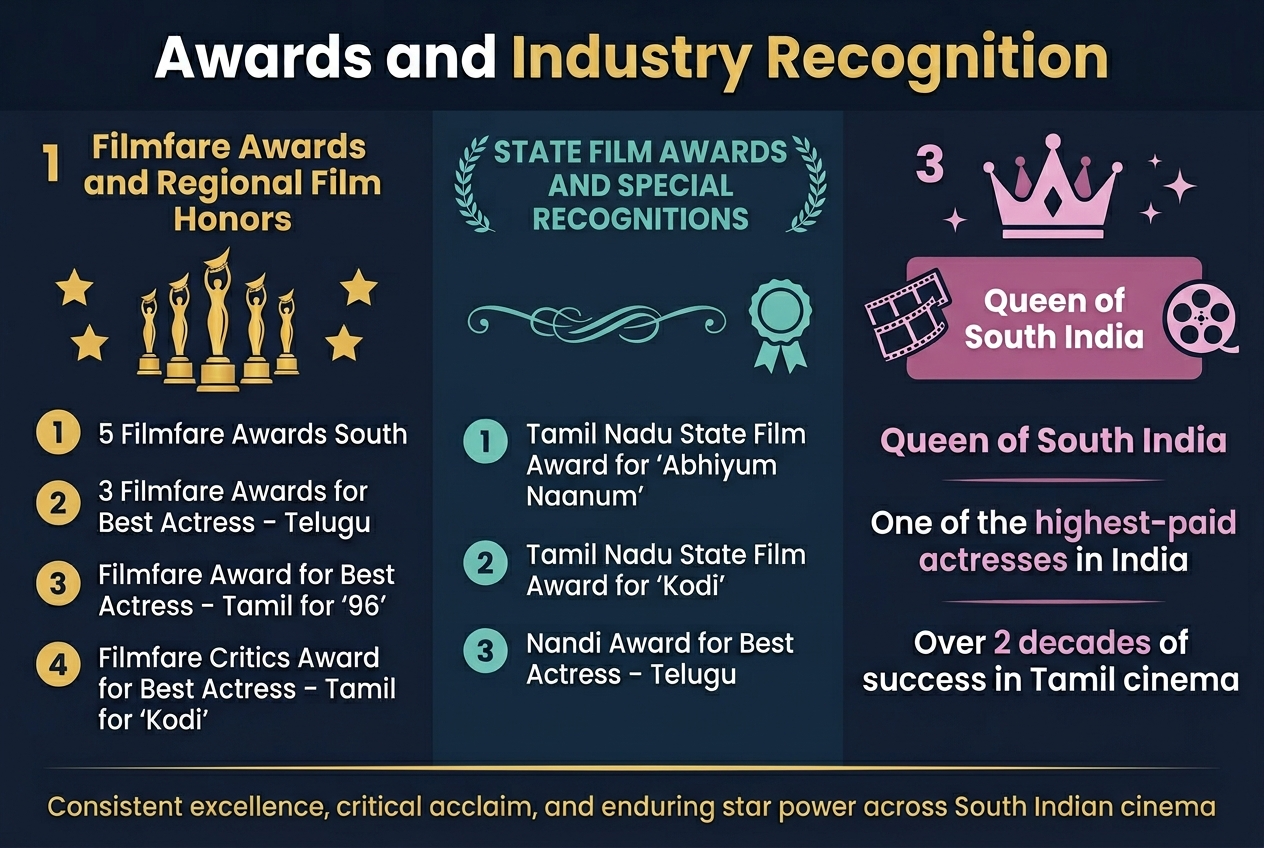
Trisha Krishnan’s exceptional talent has been consistently recognized through prestigious industry honors, most notably her impressive collection of five Filmfare Awards South. Her dominance in Telugu cinema is particularly evident through her three Filmfare Awards for Best Actress – Telugu, showcasing her remarkable ability to connect with audiences and deliver compelling performances across multiple films.
Her versatility extends beyond Telugu cinema, as demonstrated by her recognition in Tamil films. She earned the coveted Filmfare Award for Best Actress – Tamil for her outstanding performance in the critically acclaimed film ‘96‘, a role that further solidified her position as a versatile performer capable of handling diverse characters with equal finesse. Additionally, her nuanced portrayal in ‘Kodi‘ earned her the Filmfare Critics Award for Best Actress – Tamil, highlighting not just popular appeal but critical acclaim for her sophisticated acting choices.
State Film Awards and Special Recognitions
Now that we have covered her Filmfare achievements, Trisha’s excellence has also been acknowledged at the state level through significant honors. She received a prestigious Tamil Nadu State Film Award for her exceptional performances in two distinct films: ‘Abhiyum Naanum‘ and ‘Kodi‘. This dual recognition underscores her consistent ability to deliver memorable performances across different genres and storytelling approaches.
Her talent has transcended regional boundaries, earning her recognition in Telugu cinema through the Nandi Award system, where she received the Nandi Award for Best Actress – Telugu. These state-level honors represent the highest form of recognition within regional cinema industries, validating her contribution to South Indian entertainment.
Establishment as Queen of South India
With this impressive array of accolades in mind, Trisha has rightfully earned the distinguished title of “Queen of South India,” a recognition that reflects her unparalleled impact on the industry. This honorary title is not merely ceremonial but represents her sustained excellence and market dominance across multiple film industries in South India.
Her status is further reinforced by her position as one of the highest-paid actresses in India, a testament to her commercial viability and star power. Most remarkably, she has maintained this successful trajectory for over two decades in Tamil cinema, demonstrating exceptional longevity in an industry known for its rapidly changing dynamics. This sustained success across such an extended period speaks to her adaptability, professional dedication, and enduring appeal to audiences across generations.
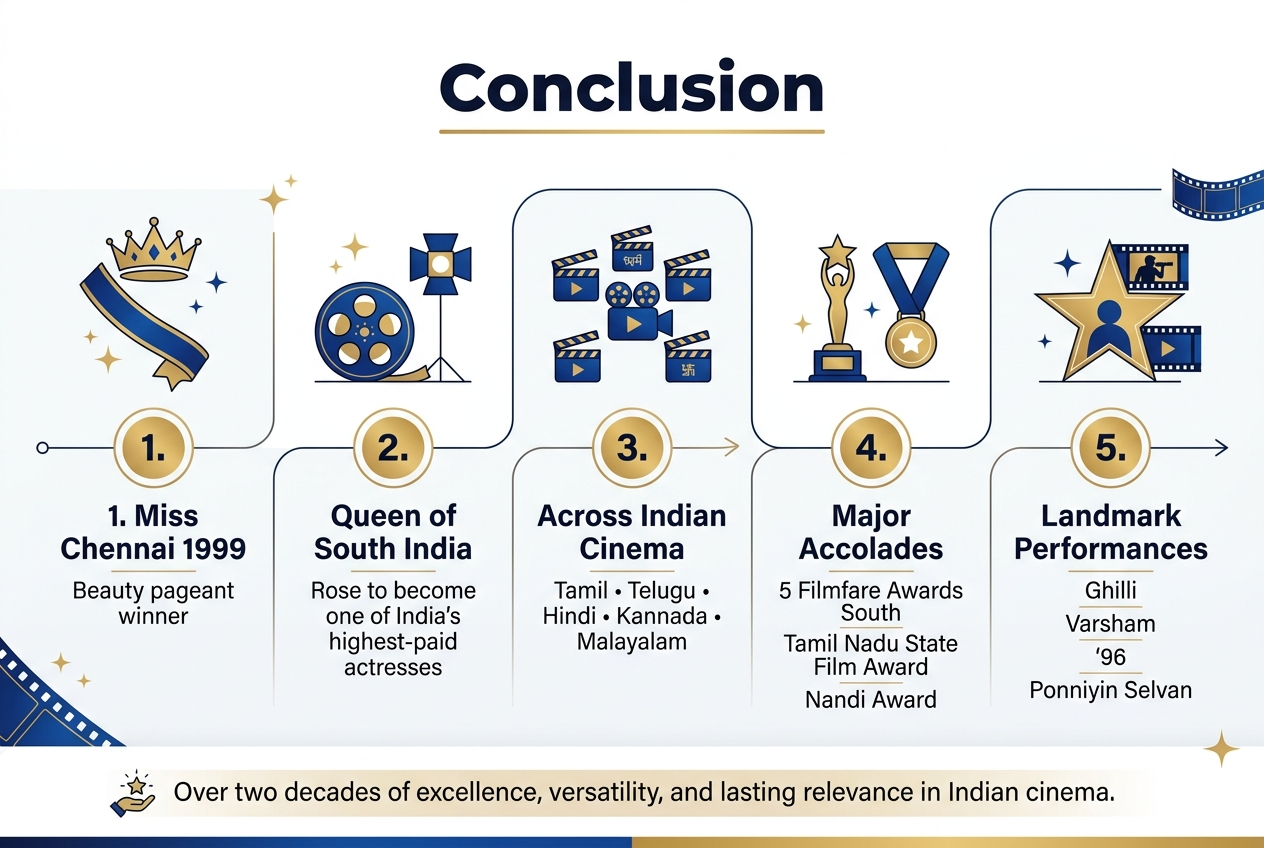
Trisha Krishnan’s remarkable journey from a beauty pageant winner to becoming the “Queen of South India” stands as a testament to her talent, dedication, and versatility. Her transition from Miss Chennai 1999 to one of India’s highest-paid actresses demonstrates how she successfully navigated the competitive world of cinema across multiple industries. With over two decades of sustained excellence in Tamil cinema and successful ventures into Telugu, Hindi, Kannada, and Malayalam films, she has proven her ability to adapt and thrive in diverse cinematic landscapes.
Her impressive collection of accolades, including five Filmfare Awards South, a Tamil Nadu State Film Award, and a Nandi Award, reflects the industry’s recognition of her exceptional performances. From early hits like “Ghilli” and “Varsham” to recent acclaimed works like “’96” and “Ponniyin Selvan,” Trisha continues to choose roles that showcase her range and depth as an performer. Her journey serves as an inspiration for aspiring actors, proving that with persistence, talent, and the right choices, one can build a lasting legacy in Indian cinema while maintaining relevance across generations.